
Running script · Glyph · Published 2026-10-20 · By The Lettering Desk
心 in running script: what a stroke is allowed to lose
心 contains the hardest single stroke in Chinese writing — the 卧钩, a hook that lies down — and running script solves it by re-drawing the character's economy: the left dot turns into a stub of vertical, the two right-hand dots drift onto a single filament, and the hook keeps every bit of its difficulty. This page is about which savings are legitimate.
- Glyph
- 心 — Xīn — the character 心 and the economy of running script
- Hand
- Running script
- x-height
- —
- Nib / brush angle
- 卧钩的平走段近乎水平,收尾回钩向左上约 60°
- Tool
- 兼毫小楷,出锋约 4 mm
- Stroke order
- 左点 → 卧钩 → 中点 → 右点 → 牵丝(5 strokes)
Stroke sequence
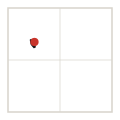
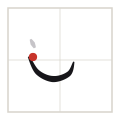
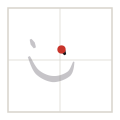
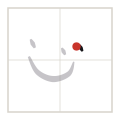
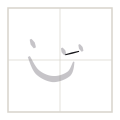
The 卧钩: a hook that lies down
A 卧钩 starts high on the left, descends, flattens out along the bottom of the character, and only then hooks — upward and to the left, back toward the body of the character. Two changes of direction inside one stroke is what makes it hard: the brush must decelerate twice without stopping and without losing the tip.
In running script the bottom of the 卧钩 becomes flatter than in regular script and the final hook becomes more vertical, around 60° from horizontal. The stroke must still end sharp. A blunt end here is visible from the next desk.
Legitimate savings and stolen ones
| Element | Regular script | Running script | Verdict |
|---|---|---|---|
| Left 点 | a distinct side dot | drawn as a short stub of vertical | legitimate — the dot's direction is preserved |
| 卧钩 | full curve with a raised hook | flatter bottom, hook at ≈ 60° | must not be simplified |
| Middle 点 | separate dot, set high | kept, but its exit leans to the right | legitimate |
| Right 点 | separate dot | joined to the middle dot by a filament | legitimate |
| Anything that turns the hook into a plain 捺 | — | — | stolen — the character stops being 心 |
The filament between the two right dots
The middle dot and the right dot sit above the 卧钩 at slightly different heights. Running script connects them with a filament that runs down-right from the middle dot's exit into the right dot's head. Keep the filament under half the middle dot's width and let it dip toward the hook — the dip is what visually ties the dots to the stroke below them.
It is also acceptable to keep the two dots separate. What is not acceptable is a filament that runs horizontally: it flattens the upper right corner and makes the character look like a different word.
Writing 心 in a compound
心 is a left-side radical in 性 and 情 and a bottom component in 思 and 想, and it behaves differently in each position. On the left it narrows: the 卧钩 becomes almost a straight 竖钩 and the three dots compress into the upper half. At the bottom it widens and flattens, and the hook is the last thing the brush does before leaving the character.
When you move from the standalone character to a compound, keep the hook's direction identical. The dots may compress; the hook may not tilt.

Printable A4, drawn to the worksheet specification — print at 100 % and check one cell with a ruler.
Takeaways
- The 卧钩 changes direction twice without stopping — that is its difficulty, not its shape.
- Running script flattens the bottom of the hook and steepens the final kick to about 60°.
- Legitimate savings preserve direction; illegitimate ones destroy a stroke's function.
- Compress the dots when 心 moves left; never tilt the hook.